In This Article
- Is 1688.com Legit? The Truth About Sourcing Risks
- Spotting Scammers: The Supplier Verification Guide
- Safe 1688 Setup: Registering for Real Scam Prevention
- Payment Security: Avoiding Off-Platform Wire Scams
- The Translation Trap: Secure Sourcing Conversations
- How to Avoid Shipping Scams on 1688.com
- How to Spot Fake Products and IP Risks on 1688
- What to Do If You Are Scammed or Receive Fraudulent Orders
Is 1688.com Legit? The Truth About Sourcing Risks
Yes, 1688.com is a legitimate and highly reputable wholesale platform. It is owned and operated by the Alibaba Group, China's largest e-commerce conglomerate. However, while the infrastructure is secure, international buyers face severe operational risks and potential scams because the platform is strictly designed for domestic Chinese trade.
The Breakdown: Platform Safety vs. Supplier Risk
To source safely, you must understand the critical gap between platform legitimacy and individual supplier behavior:
Corporate Backing: 1688.com is the domestic sister site of Alibaba.com, hosting millions of registered Chinese factories and trading companies.
The Payment Barrier: The platform features a built-in escrow system (Alipay), but it only accepts domestic Chinese payment methods. Foreign buyers cannot pay directly without a Chinese bank account, business entity, or a third-party sourcing agent.
The Sourcing Reality: Anyone with a Chinese business license can open a shop. 1688 does not police daily supplier honesty, leaving international buyers exposed to low-quality products, shipping scams, or "factory identity" fraud (middlemen posing as manufacturers).
Comparison Table
| Feature / Aspect | 1688 Platform Legitimacy (The Safe Part) | Individual Supplier Risks (The Dangerous Part) |
|---|---|---|
Ownership & Trust | Owned by Alibaba Group; legally compliant corporate giant. | Vetted only for basic business registration. Many "factories" are actually hidden middlemen. |
Payment Security | Escrow payments protect funds inside the ecosystem. | Blocked for most foreigners. Scammers exploit this by pushing you to pay off-platform via WeChat or private transfer. |
Buyer Protection | Robust system, but tailored only for the Chinese market. | The Timeline Trap: 1688's automatic order completion window (approx. 10 days) closes long before international shipments arrive, leaving you with zero leverage for disputes. |
Quality Control | 1688 provides online infrastructure, not physical inspection. | High risk of "bait-and-switch" quality. Once goods leave China, returning them is financially impossible. |
Logistics & Language | None. Platform is 100% in Chinese. | Suppliers do not ship internationally or handle export customs. You must hire a Chinese freight forwarder. |
Spotting Scammers: The Supplier Verification Guide
You cannot trust a 1688 supplier just because they have a professional-looking storefront. Scammers and low-tier trading companies are excellent at faking their digital appearance.
To protect your money, use this updated four-step verification process before making any buying decisions.
Step 1: Decode the Profile Badges (The Right Way)
1688 hands out various badges to sellers, and they carry significant weight due to mandatory third-party audits. However, you must know what they actually guarantee.
The Bull Badge (实力商家 - Shili Shangjia): These suppliers pay high annual fees and undergo rigorous on-site audits by world-class inspection firms like SGS or TÜV Rheinland. They must prove real production lines or massive, exclusive warehouse inventory. It is highly secure, but double-check if they are registered as a "Power Factory" (实力工厂) or a "Power Merchant" (实力百货).
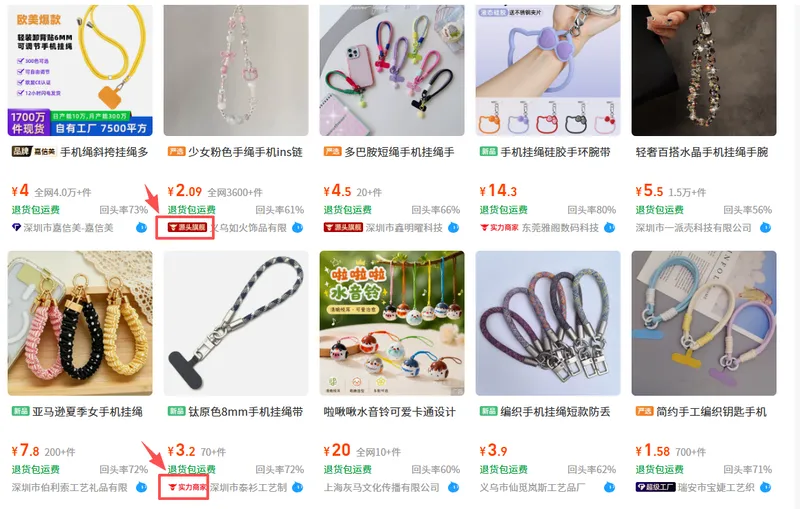
Power Factory The Super Factory (超级工厂): This is the ultimate gold standard. These sellers are heavily vetted for enormous production capacity, advanced quality control, and R&D capabilities. They target large-scale global importers.
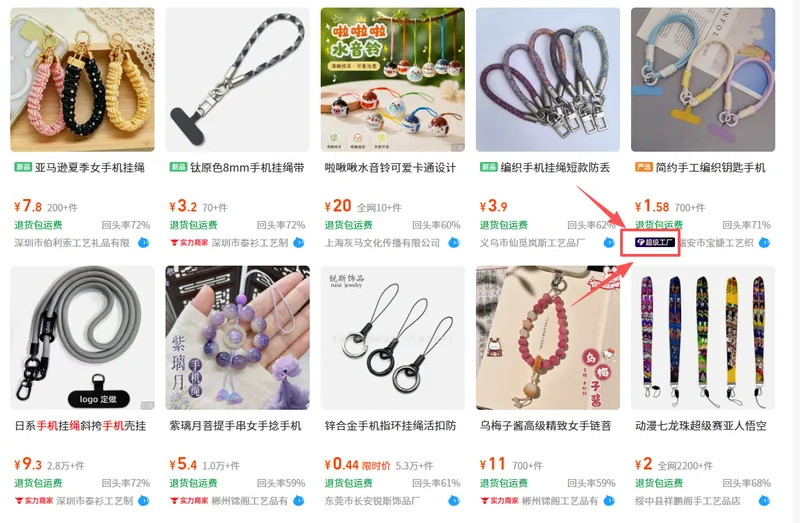
Super Factory
Step 2: Audit the Business License & Payment Methods
Every legitimate seller must display their Chinese business license. You can find this by clicking on the company name and viewing their "深度档案" (In-depth Profile) or "工商信息" (Industrial and Commercial Information).
Check the "Scope of Business" (经营范围): Look for key manufacturing words like "Manufacturing" (制造), "Production" (生产), or "Processing" (加工). If the scope only lists words like "Wholesale" (批发), "Retail" (零售), or "Sales" (销售), they are legally registered as a trading company, not a factory.
The Payment Rule: Never wire money to a private bank account. Always pay through the 1688 platform using secure payment gateways (like secure Escrow or Cross-border Pay).
Step 3: Check the "Repeat Purchase Rate" Metric with Context
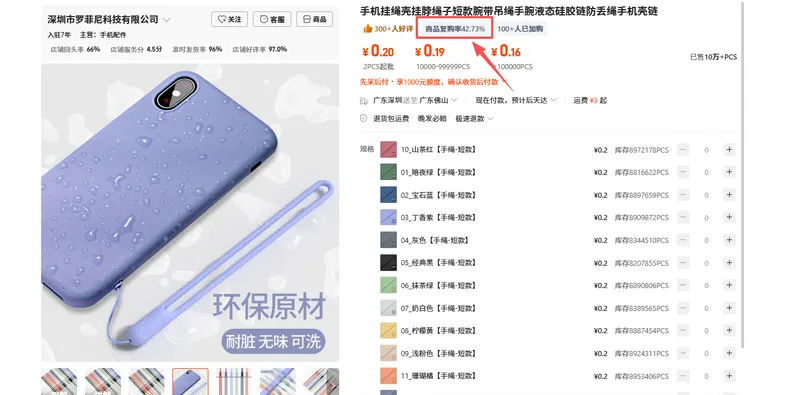
On the supplier's homepage or product details page, look for the "复购率" (Repeat Purchase Rate) percentage. This tracks how many buyers come back for repeat orders within 90 days.
A healthy repeat purchase rate varies wildly by product. For fast-fashion apparel, cosmetics, and phone accessories, look for 20% to 40%. For heavy machinery, industrial equipment, or highly customized promotional gifts, a repeat purchase rate of 5% to 10% is completely normal.
Step 4: Utilize Official Factory Videos and VR Tours
While a spontaneous, live WeChat video call seems like a bulletproof test, real factory sales reps are often based in separate office buildings and cannot easily enter noisy or restricted factory floors on demand. Instead, use 1688's built-in factory transparency tools.
The Digital Factory Tour: Look for the "厂房视频" (Factory Video) or "全景看厂" (VR Factory Tour) icon under their 1688 profile. These are officially verified, 360-degree interactive panoramic images captured directly by 1688's official field inspectors.
The Customized Test: If you want a live verification via WeChat, ask the sales rep to write your company name or the current date on a piece of paper and hold it next to your product sample or inside their warehouse.
Safe 1688 Setup: Registering for Real Scam Prevention
To protect your money, you must register a real account linked directly to your identity.
The Registration Rules: High-Risk vs. Safe Setup
| High-Risk Route (Triggers Account Freezes) | Safe Route (Protects Your Purchases) |
|---|---|
Buying Accounts: Purchasing "aged" accounts from Telegram or online forums. | Direct Registration: Creating your own account on the official 1688 or Taobao app. |
Virtual Numbers: Using VOIP numbers (like Google Voice) that fail SMS verification. | Physical SIM Cards: Using a real mobile number that you personally control. |
Black-Market Exchange: Paying via unauthorized third parties or peer-to-peer transfers. | Verified Alipay: Linking an international Alipay account verified with your passport. |
How Safe Setup Protects Your Money
An officially registered account gives you full access to 1688's buyer protection features. If a supplier sends defective goods or fake tracking numbers, you can use the official "Apply for Refund" (申请退款) button.
Furthermore, a verified account lets you pay safely using your international Alipay (linked to your overseas credit card). This keeps your money secure in 1688's official escrow system until your order arrives.
Payment Security: Avoiding Off-Platform Wire Scams
When sourcing on 1688.com, maintaining all financial transactions within the platform's official infrastructure is necessary to secure your capital. Once funds are transferred outside of the 1688 checkout ecosystem, the platform loses all technical and legal tracking capability, making fund recovery impossible.
To evaluate payment compliance, use the following risk classification:
Approved Payment Methods (Platform Tracking Enabled)
1688 Cross-Border Pay (跨境宝 - Kua Jing Bao / World Pay): The compliant channel for international registered businesses. Run via authorized clearing networks like WorldFirst, it allows overseas entities to settle orders in local currency, which is legally converted into RMB and transferred directly to the seller's verified corporate account through the official checkout page.
Verified International Alipay with Direct Credit Card: For individual buyers, linking a passport to an Alipay account and completing checkout on the 1688 payment page using a linked international credit card (Visa/Mastercard).
Conditional Methods (Requires Third-Party Verification)
Verified 1688 Sourcing Agents: Utilizing a registered trading or logistics agent to pay the supplier. This method is secure only if you contract with an established company using transparent enterprise bank transfers. It poses significant risks if individual employees or agents request split, unrecorded payments.
Compliance Note: FlatFee Sourcing is an approved third-party agent. All transactions go through verified corporate bank channels with transparent tracking and audited payments to secure your capital.
High-Risk Channels (Zero Platform Buyer Protection)
Direct T/T (Wire Transfer) to Private Accounts: A common fraudulent practice where a seller provides bank routing details for an individual's personal account (often claiming it belongs to the "general manager" or "accountant") rather than the business entity registered on 1688.
Private WeChat Pay or Alipay Transfers: Sending peer-to-peer funds inside chat applications. These personal transfers bypass the 1688 escrow ledger, allowing rogue suppliers to block the buyer and sever communication immediately.
Western Union or Consumer Cash Apps: Non-traceable payment methods that offer no commercial dispute resolution or recovery options.
Common Pretexts for Off-Platform Payments
Unverified suppliers rarely refuse platform payments outright; instead, they present operational justifications to bypass the 1688 checkout gateway. The following explanations should be treated as compliance flags:
The Tax and Invoice Pretext: "If we process this through the 1688 platform, we must account for high corporate tax rates and administrative fees. If you wire funds directly to our private account, we can lower the unit price by deducting the invoicing cost."
The Gateway Maintenance Pretext: "Our integrated 1688 cross-border payment portal is undergoing scheduled maintenance today. To prevent production delays and secure your raw materials, please send the deposit directly to this alternative account."
Standard Sourcing Protocol: If a payment cannot be validated and executed inside the official 1688 checkout interface, do not transfer the funds.
The Translation Trap: Secure Sourcing Conversations
Language differences can create real misunderstandings during sourcing. Some suppliers may use ambiguous wording or suggest moving the conversation to WeChat for "faster replies." However, if a dispute arises over product quality, agreements made outside the 1688 platform are very difficult to use as formal evidence in the platform's internal dispute review process.
To protect your order, follow these basic communication protocols:
The Chat Checklist: Do's vs. Don'ts
❌ DON'T move the conversation to WeChat or WhatsApp.
Sellers sometimes prefer this for convenience, but 1688's customer service team will not accept chat screenshots from external apps as valid evidence during a dispute.✅ DO keep all order-related discussions on AliWangWang (阿里旺旺).
This is 1688's official built-in messaging tool. The platform retains these chat logs, and their support team can reference them if you need to file a complaint.❌ DON'T rely on vague descriptions like "good quality" or "make it like the picture." These terms are subjective and difficult to enforce if the supplier interprets them differently.
✅ DO use precise, measurable specifications.
Translate your key requirements into clear Chinese terms with concrete data—for example, material grade (e.g., "304 stainless steel"), fabric weight (e.g., "280 GSM"), or exact color codes (e.g., Pantone numbers). Put these numbers directly in the chat.
Before you pay, send a final summary message on AliWangWang that lists the core specifications (dimensions, material, color, packaging, etc.) in short, clear sentences. Ask the seller to reply with a direct confirmation like "Yes" or "Confirmed" (是的 / 确认).
Using a translation tool like DeepL is helpful, just translate your specs into Chinese, then translate the Chinese back to English to catch any awkward phrasing.
Having this confirmed record in AliWangWang won't eliminate all risks, and it doesn't automatically trigger a penalty against the supplier. But it does significantly strengthen your case if you need to open a dispute, because the platform can see that the seller explicitly agreed to your stated requirements before production.
How to Avoid Shipping Scams on 1688.com
Logistics is one of the most critical stages where international buyers lose money. Since 1688.com is designed for domestic trade within China, its buyer protection timeline is short. Generally, the platform automatically releases payment to the seller within 10 days of shipment, or 48 hours after the carrier marks the package as "delivered". Because ocean freight takes weeks, the system will release your escrow funds to the supplier long before the cargo reaches your country. Dishonest suppliers take advantage of this timeline gap through specific tactics.
Common 1688 Shipping Scams
The Fake Tracking Trick: The seller uploads a domestic tracking number that does not belong to your order. If that package happens to be delivered to another address in China, the 1688 system registers a successful delivery. The 48-hour automated countdown triggers, and the platform releases the money to the seller before you notice.
The Empty Box / Brick Scheme: The seller ships a package containing paper, bricks, or low-value waste to your freight forwarder's warehouse. Because forwarders handle thousands of packages daily, they often sign for the delivery based on the outer label without looking inside. Once signed, 1688 marks the order as complete, and you only discover the fraud weeks later when the container arrives at your final destination.
Standard Action Plan: How to Secure Your Shipment
To prevent these issues, you must verify your cargo while it is still inside China. Implement these three steps for every wholesale order:
Use a Chinese Warehouse Address: Never ask a 1688 supplier to ship directly to your overseas address via international couriers. Always have them ship to a trusted third-party freight forwarder or sourcing agent with a warehouse inside China (typically in logistics hubs like Guangzhou, Yiwu, or Shenzhen).
Require Inbound Inspection: Instruct your freight forwarder to inspect the packages the day they arrive. Do not let them sign blindly. They must open the cartons, verify the product count, check basic quality, and send you clear photos or videos for confirmation before the 1688 protection window closes.
Manually Extend the Timer or File a Refund: If your forwarder reports that the shipment is delayed, incorrect, or fraudulent, you must act before the system automatically closes the order. Log into 1688, go to your order details, and click "Delay Receiving" (延长收货) to add 3, 5, or 7 days to your protection window. If the supplier is uncooperative or sent a fake package, immediately click "Apply for Refund" (申请退款). Filing a refund freeze the escrow funds indefinitely until the dispute is resolved.
How to Spot Fake Products and IP Risks on 1688
Importing infringing goods can get your shipment seized, lead to fines, or get your selling account banned. 1688 is a domestic Chinese platform, many sellers don't know or care about overseas IP rules. You need to screen listings yourself.
Three Red Flags
Blurred logos and “real logo” promises: Sellers blur logos to avoid platform takedowns, then tell you privately the actual goods will carry the full logo. This almost always means unauthorized copies.
Designs that can't be truly generic: A unique shape (ergonomic chair, viral beauty tool) with no licence documentation is likely a cloned design patent or trade dress.
“Branded” parts priced below component cost: If a wholesaler claims genuine Qualcomm chips or Sony sensors but the unit price is lower than the component alone, they're either counterfeit or pulled from used devices.
Lower-Risk Sourcing in Practice
Stick to white-label basics: No distinctive brand elements, no patented shapes, no copyrighted characters. If a shape is strongly associated with one brand in your target country, skip it.
Verify any licensing claim: Demand a stamped authorization letter from the brand owner. Don't accept chat screenshots. If possible, cross-check with the brand directly.
Reverse image search before ordering: Upload the listing image to Google Lens or search on Amazon/eBay. If the identical design only appears under one established brand, it's protected. For electronics, a quick patent database search adds another safety layer.
What to Do If You Are Scammed or Receive Fraudulent Orders
If a 1688 supplier ships defective products, sends an empty box, or provides a fake tracking number, you must act before the system automatically confirms delivery and releases the payment.
Follow these practical steps to hold the funds and resolve the dispute through the platform.
Step 1: Open a Refund Dispute to Pause the Order Timer
The platform automatically releases payment to the seller a certain number of days after shipment. You must stop this countdown immediately.
Log into your 1688 buyer dashboard and locate the order.
Click "Apply for Refund" (申请退款).
Select the appropriate reason (e.g., "Package not received", "Wrong items delivered", or "Quality issues").
Submitting this request instantly pauses the automatic confirmation timer, preventing the funds from being credited to the seller's account while the dispute is pending.
Step 2: Prepare and Upload Objective Evidence
1688 customer service reviews disputes based on verifiable proof. Descriptions or text complaints alone are rarely sufficient. You should collect and upload the following:
AliWangWang Chat Records: Screenshots of your conversations using the official chat tool. This includes agreed product specifications, delivery dates, or materials.
Unboxing Video: If you use a shipping forwarder, request a video of their warehouse team opening the parcel. This helps prove the items were damaged or incorrect before any international transit.
Shipping Weight Verification: If you received an empty box or are missing items, take a photo of the courier receipt showing the official registered weight. Comparing this with the expected weight of your total order serves as objective proof of missing contents.
Step 3: Request 1688 Platform Intervention
After you open a dispute, the seller has a specific timeframe to accept or reject it.
Do not close the dispute prematurely: Shady sellers may ask you to close the case in exchange for a promise to ship replacements later. Once you close the dispute and the system timer expires, you lose your leverage.
Escalate the case: If the seller rejects your refund request or refuses a reasonable solution, click "Request 1688 Intervention" (申请客服介入).
A 1688 dispute specialist will review the submitted evidence against platform policies. If the evidence supports your claim, the platform will process the refund, which may be deducted directly from the seller's required security deposit.
Comments