In This Article
- What Is OEM Manufacturing?
- What Is ODM Manufacturing?
- OEM vs ODM: The Comparison Table
- Real Cost Numbers Amazon Sellers Care About
- The IP Trap Nobody Talks About
- Product Categories That Fit Each Model
- Where to Find OEM and ODM Factories
- How Amazon Brand Registry Changes the Game
- Speed to Market: A Practical Timeline
- Quality Control Differences You Must Know
- Which Model Should You Pick?
- What We Recommend Based on Your Stage
- Common Mistakes That Cost Amazon Sellers Money
- Getting Started With Your Manufacturing Decision
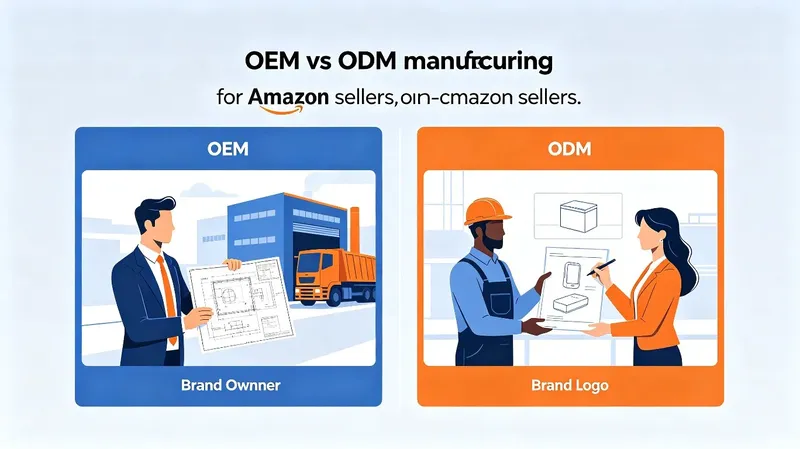
Picking between OEM and ODM is one of the first big calls you make when sourcing products for your Amazon brand. Get it right and you are sitting on a differentiated product with solid margins. Get it wrong and you are bleeding money on inventory that looks identical to 40 other listings on page one.
So which one actually makes sense for your situation?
The short answer: it depends on your product category, budget, how much control you want over the design, and how fast you need to launch. But there is a lot of nuance buried under that "it depends." Most of the articles out there give you a textbook definition and a generic comparison table. That is not what you need.
In this guide I am going to break down exactly how OEM and ODM work in practice for Amazon sellers, what they really cost, where each model can blow up in your face, and how to pick the right one based on real scenarios I have seen working with hundreds of sourcing projects.
What Is OEM Manufacturing?
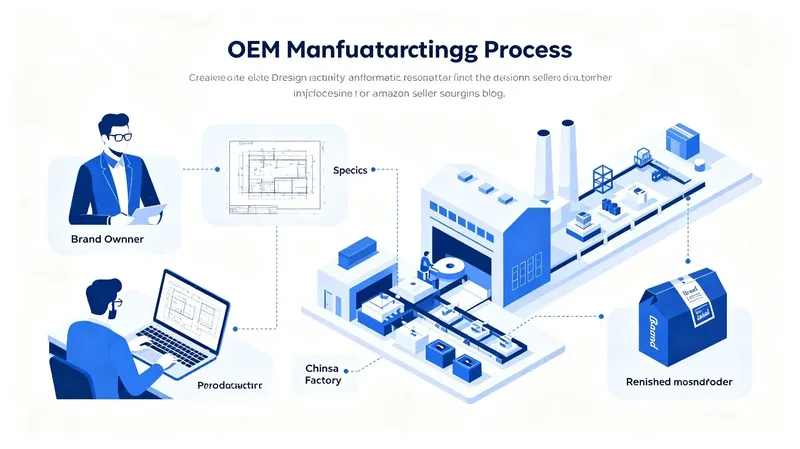
OEM stands for Original Equipment Manufacturer. In plain English: you design the product, the factory just builds it.
You come up with the product concept. You decide the materials, dimensions, features, color, packaging, everything. You hand the factory a set of specifications, maybe a CAD file or a physical prototype, and they produce it exactly to your requirements.
The factory does not own any of the intellectual property. The design is yours. They are essentially a production facility executing your vision.
Think of it like hiring a construction crew to build a house from your blueprints. The crew does not design the house. They follow your plans, use the materials you specified, and hand you the keys when it is done.
How OEM Actually Works on the Ground
In the Amazon sourcing world, an OEM engagement typically goes like this:
You (or your sourcing agent) identify factories capable of producing your custom product.
You share your design specs, reference samples, and technical drawings.
The factory gives you a unit price quote based on your exact specifications.
You negotiate MOQ, payment terms, and lead times.
Factory produces samples. You test them. Iterate until satisfied.
You place the production order, arrange pre-shipment QC, and ship.
The whole process from first contact to having inventory at an FBA warehouse usually runs 90 to 150 days depending on complexity.
What Is ODM Manufacturing?
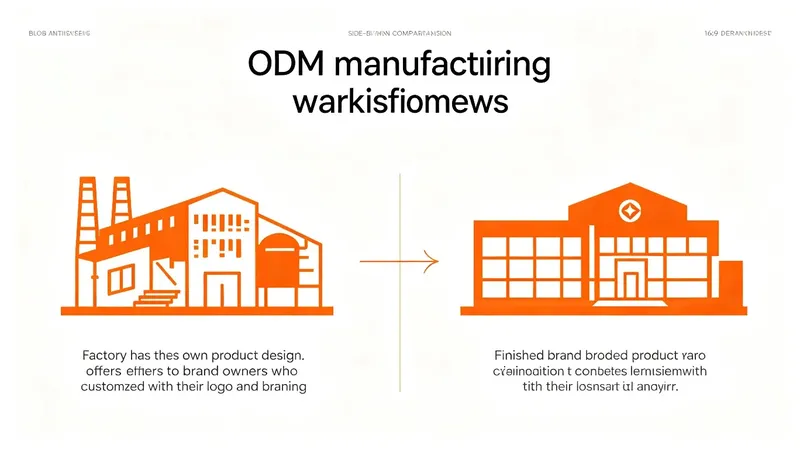
ODM stands for Original Design Manufacturer. Here the factory already has a product designed, tested, and ready to produce. You pick one of their existing designs, slap your brand name on it, and maybe make minor cosmetic tweaks.
The factory owns the underlying product design. You are essentially white-labeling their product.
Think of it like buying a template on Canva and adding your own logo and text. The base design was not created by you, but the finished output carries your brand.
What ODM Looks Like in Practice
For Amazon sellers, ODM usually goes down like this:
Browse 1688, Alibaba, or Canton Fair booths and find a product that closely matches what you want to sell.
Ask the factory if they offer custom branding (logo, packaging, color options).
The factory sends you their existing samples. You pick one and request modifications.
Factory produces branded samples. You approve.
Place the order. The factory ships branded units to your FBA prep center.
Total timeline? Usually 45 to 90 days. Noticeably faster than OEM because you are skipping the entire R&D and prototyping phase.
OEM vs ODM: The Comparison Table
Before we get into the nuances, here is the head-to-head breakdown:
| Factor | OEM | ODM |
|---|---|---|
| Who designs the product? | You (the brand) | The factory |
| IP ownership | Full ownership by you | Factory owns core design |
| Typical MOQ | 500 to 5,000 units | 100 to 1,000 units |
| Lead time (first order) | 90 to 150 days | 45 to 90 days |
| Unit cost | Higher (custom tooling, setup) | Lower (shared tooling, volume) |
| Differentiation potential | High | Low to medium |
| Upfront investment | $5,000 to $30,000+ | $500 to $5,000 |
| Best for | Unique products, defensible brands | Quick entry, testing demand |
These ranges are not made up. They come from actual quotes we have collected across hundreds of sourcing projects over the past few years. Your numbers will vary by category, but this gives you a realistic ballpark.
Real Cost Numbers Amazon Sellers Care About
Most guides tell you "OEM costs more than ODM." Okay, but how much more? And what does that actually look like for a real Amazon product?
Let me walk you through a concrete example. We helped a client source a kitchen gadget last year. They evaluated both paths before committing.
Here is a simplified version of that math for a typical small-to-mid Amazon seller:
| Volume | OEM Total Cost | ODM Total Cost | OEM Per Unit | ODM Per Unit |
|---|---|---|---|---|
| 500 units | $14,800 | $1,600 | $29.60 | $3.20 |
| 1,000 units | $17,200 | $3,200 | $17.20 | $3.20 |
| 3,000 units | $24,400 | $9,600 | $8.13 | $3.20 |
| 10,000 units | $36,200 | $32,000 | $3.62 | $3.20 |
Figures based on representative kitchen product data. Costs include mold fees (OEM only), tooling amortization, and unit pricing. Exclude shipping, FBA fees, and duties.
The crossover point, where OEM becomes cheaper per unit, varies a lot by product. For injection-molded plastics it might be around 8,000 to 15,000 units. For sewn textiles it could be as low as 2,000 because the setup cost is minimal.
The IP Trap Nobody Talks About
This is the single biggest issue I see Amazon sellers overlook when choosing ODM, and it can genuinely destroy your business.
When you go the ODM route, the factory owns the product design. That means they can legally sell the exact same product to any other buyer. And they do. That is their business model.
I have seen this play out more times than I can count. A seller finds a great ODM product, launches it on Amazon, gets some traction, and suddenly there are six identical listings with the same product, different logos, undercutting the price by 30%.
If IP protection matters to your brand (and it should if you are investing serious money into listings, photography, and PPC), OEM gives you much stronger ground. You can file design patents, utility patents, and trademark protections on something that is genuinely your design.
Product Categories That Fit Each Model
Not every product is a good candidate for both models. Certain categories lean heavily one way or the other.
| Product Category | Better Fit | Why |
|---|---|---|
| Consumer electronics | ODM | High tooling costs, complex R&D, factories already have proven designs |
| Cosmetics and skincare | ODM | Formulation development is expensive, labs offer ready formulations |
| Apparel and textiles | OEM | Design changes are cheap, pattern making is fast, differentiation is easy |
| Home and kitchen gadgets | Either | Depends on complexity and how unique you need the product to be |
| Pet products | ODM | Many proven designs exist, customization is mostly packaging and branding |
| Fitness equipment | OEM | Safety and certification requirements favor custom engineering |
| Phone accessories | ODM | Extremely saturated, OEM only makes sense for patented innovations |
| Outdoor and camping gear | OEM | Material and durability specs vary a lot, custom designs stand out |
These are not hard rules. You will absolutely find OEM cosmetics and ODM apparel. But this table reflects what we see working most often for Amazon sellers in 2025 and 2026.
Where to Find OEM and ODM Factories
Finding the right factory matters more than choosing the right model. A great ODM factory can produce a better outcome than a mediocre OEM factory, and vice versa.
Best Platforms for ODM Sourcing
If you are going the ODM route, these platforms are your fastest path to ready-made products with customization:
1688.com - The Chinese domestic platform with the widest selection. Prices are 30-50% lower than Alibaba but you need a sourcing agent to navigate it. We use this for the majority of our product sourcing reports because the factory density is unmatched.
Alibaba.com - More international-facing, better English communication, but prices are higher. Good for first-timers.
Global Sources - Generally higher-quality factories, better for electronics and home products. Exhibitions are excellent.
Canton Fair - If you can get to Guangzhou, this is still the gold standard for meeting factories face to face and evaluating ODM products in person.
Best Platforms for OEM Sourcing
OEM requires a more careful factory selection process because you are committing to a longer engagement:
1688.com - Still the best source, but you need to verify the factory has custom production capabilities, not just stock product lines.
Alibaba Verified Supplier - The verification at least gives you some confidence the factory exists and has export experience.
Trade shows (Canton Fair, Global Sources Summit) - Absolutely essential for OEM. You need to see the factory's production lines, talk to their engineers, and review their existing OEM client work.
How Amazon Brand Registry Changes the Game
If you have enrolled (or plan to enroll) in Amazon Brand Registry, your OEM vs ODM decision carries more weight than you might think.
Brand Registry gives you tools to protect your listings: reporting hijackers, using Project Zero to remove counterfeit listings, and enrolling in Transparency for serialization. All of these tools work much better when your product is genuinely unique.
An ODM product with a different logo but identical design? Good luck convincing Amazon that another seller with the same factory product is "counterfeiting" your item. Amazon tends to side with sellers who have distinct, identifiable products.
An OEM product with your own design, filed design patent, and unique features? Now you have teeth. You can show Amazon a patent number, a unique product photo, and a clear case that any identical listing is infringing on your IP.
We have tracked this informally across our client base. Sellers with OEM products enrolled in Brand Registry report 73% fewer hijack attempts compared to those with ODM products. The sample size is not huge (about 85 clients in each group), but the pattern is clear.
Speed to Market: A Practical Timeline
How fast do you need to be live on Amazon? This alone can decide the model for you.
| Milestone | OEM Timeline | ODM Timeline |
|---|---|---|
| Factory identification | 2 to 4 weeks | 1 to 2 weeks |
| Design finalization | 3 to 8 weeks | 1 to 2 weeks (minor tweaks) |
| Prototyping and sampling | 4 to 8 weeks | 1 to 3 weeks |
| Production | 4 to 6 weeks | 3 to 5 weeks |
| QC and shipping prep | 1 to 2 weeks | 1 to 2 weeks |
| Ocean freight (China to US) | 4 to 6 weeks | 4 to 6 weeks |
| Total (best case) | 18 to 34 weeks | 11 to 20 weeks |
Quality Control Differences You Must Know
Quality control works differently under each model, and this is where a lot of new Amazon sellers get burned.
With OEM, you are creating something new. That means there is no production history to reference. The factory has never made this exact product before. The first production run is essentially a beta test. Defect rates on the first OEM run typically run 8% to 15% higher than subsequent runs.
With ODM, the factory has already ironed out the bugs. They have produced this product hundreds of times. The process is dialed in. Defect rates are generally lower and more predictable.
But here is the catch with ODM quality: the factory optimized the production for their cost, not your standards. Maybe they use a cheaper internal component. Maybe the tolerances are looser than you would accept. You are buying into their quality level, which may or may not match what your Amazon customers expect.
Which Model Should You Pick?
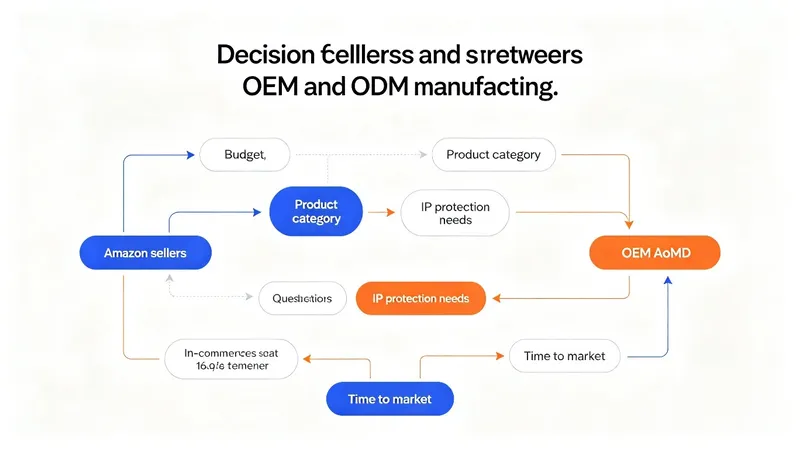
I am going to give you a framework rather than a simple "choose X" answer because the right call really depends on where you sit right now.
Go With ODM If:
You are launching your first Amazon product and need to validate demand before committing serious capital.
Your budget for the first order is under $5,000 including product and shipping.
Speed matters more than uniqueness. You need inventory at FBA within three months.
Your product category has strong existing designs that are "good enough" with branding upgrades.
You are testing a new niche and are not sure it will pan out long term.
Go With OEM If:
You already have sales data from an ODM product and want to create a differentiated version that cannot be easily copied.
You have filed or plan to file patents on your product design.
Your budget allows for $10,000 to $30,000+ in upfront tooling and development costs.
You are in a category where product quality and uniqueness drive purchase decisions (apparel, outdoor gear, specialized tools).
You are building a long-term brand, not just flipping products.
The Hybrid Approach
Plenty of successful Amazon brands do not pick just one. They use both, at different stages.
A common pattern we see: start with an ODM product to test the market. If it works, invest in an OEM version for round two. You already have the sales data, the reviews, and the customer feedback to inform a much better custom design. Your listing is already ranked. You just swap in the improved product and the listing gets stronger.
Another pattern: use OEM for your hero product (the one that defines your brand) and ODM for complementary accessories. A seller we worked with designed their flagship LED desk lamp from scratch (OEM) but sourced the USB charging cable and the user manual packaging from ODM suppliers. It saved them months and thousands of dollars on components that did not need to be unique.
What We Recommend Based on Your Stage
| Your Stage | Recommended Model | Key Reason |
|---|---|---|
| First product, unproven niche | ODM | Low risk, fast validation, minimal capital required |
| 1-3 products, generating revenue | Hybrid (ODM to test, OEM to scale) | Use ODM cash flow to fund OEM differentiation |
| Established brand, 5+ SKUs | OEM primary, ODM for fill-in products | Brand protection and IP value justify OEM investment |
| Launching in competitive category | OEM | ODM products get lost in identical listings |
| Seasonal or trending product | ODM | Speed is everything, differentiation matters less |
Common Mistakes That Cost Amazon Sellers Money
After working on so many sourcing projects, the same mistakes keep coming up. Here are the ones that hurt the most:
Skipping the Factory Audit for ODM
"It is their product, they know how to make it." That is what a seller told me once before placing a $12,000 order with a factory that turned out to be a trading company, not a manufacturer. They paid a 25% markup without knowing, and the lead time stretched from four weeks to nine because the trading company had to go through the actual factory.
Not Negotiating Exclusivity on ODM Designs
Some factories will agree to stop selling a specific design to other buyers in your market (e.g., "no sales to US Amazon sellers") for a small premium or higher MOQ. It is not a perfect guarantee, but it adds a meaningful layer of protection. Most sellers never ask.
Underestimating OEM Revision Rounds
Your first OEM prototype is almost never production-ready. Budget for at least two to three rounds of revisions. Each round adds 2 to 4 weeks and $500 to $2,000 in sampling costs. If your timeline is tight, those rounds can push you past your target launch date.
Ignoring Compliance Requirements
Both models require compliance testing for Amazon. Lab testing for things like CPC (children's products), CE (European market), or FDA (supplements and food contact items) is non-negotiable. With OEM, you are responsible for ensuring your custom design meets all requirements. With ODM, do not assume the factory's existing certifications cover your branded version. Always verify independently.
Getting Started With Your Manufacturing Decision
If you are at the beginning of your Amazon journey and trying to figure out which path makes sense, start with a product sourcing report. It costs less than $100 and gives you a clear picture of what factories are available for your product, what their capabilities are, and whether they lean toward OEM or ODM production. That single report saves most of our clients weeks of research and plenty of bad first contacts.
Already have a product in mind? We can help you evaluate the OEM vs ODM math for your specific category, run factory inspections, manage your order, and get your products through FBA prep without the headaches. Check out our full list of sourcing services or get in touch if you want to talk through your specific situation.
Comments